
Last updated November 25, 2026
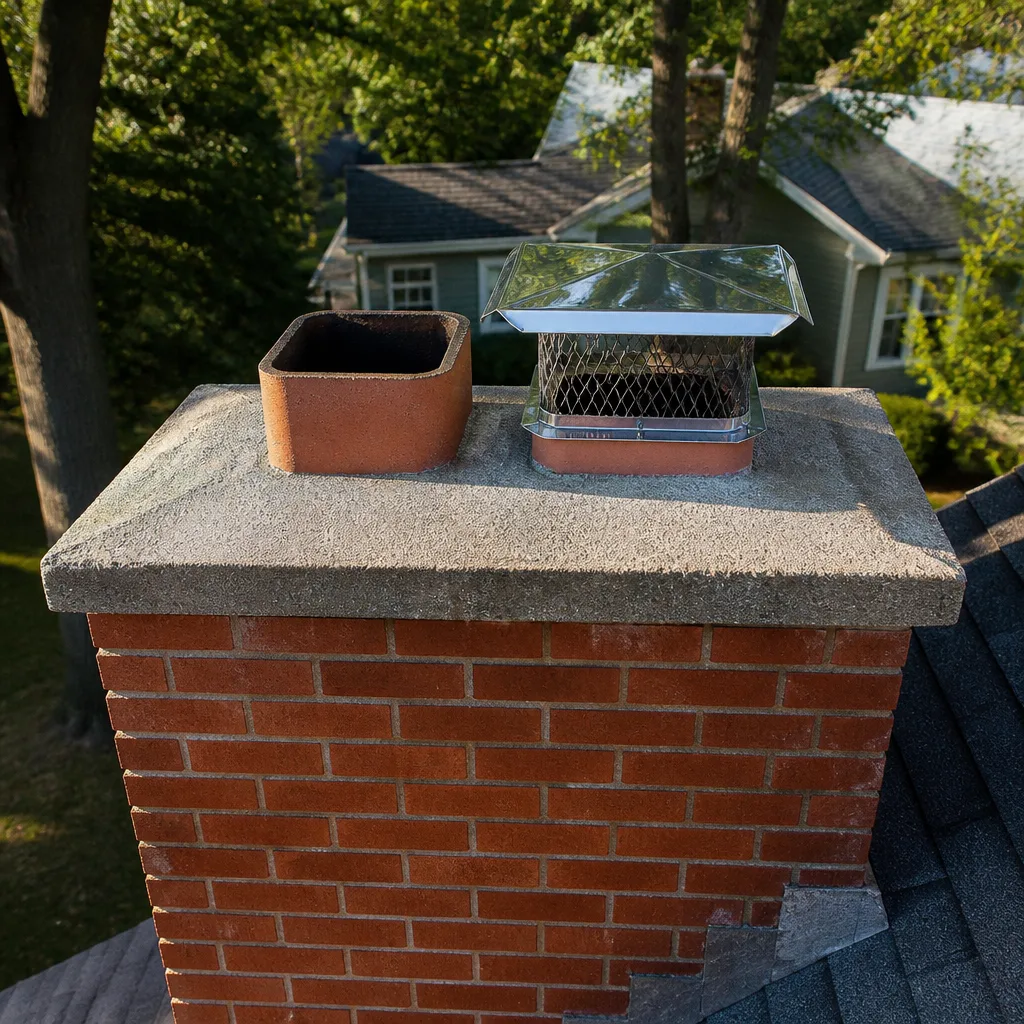 Sweep & inspection
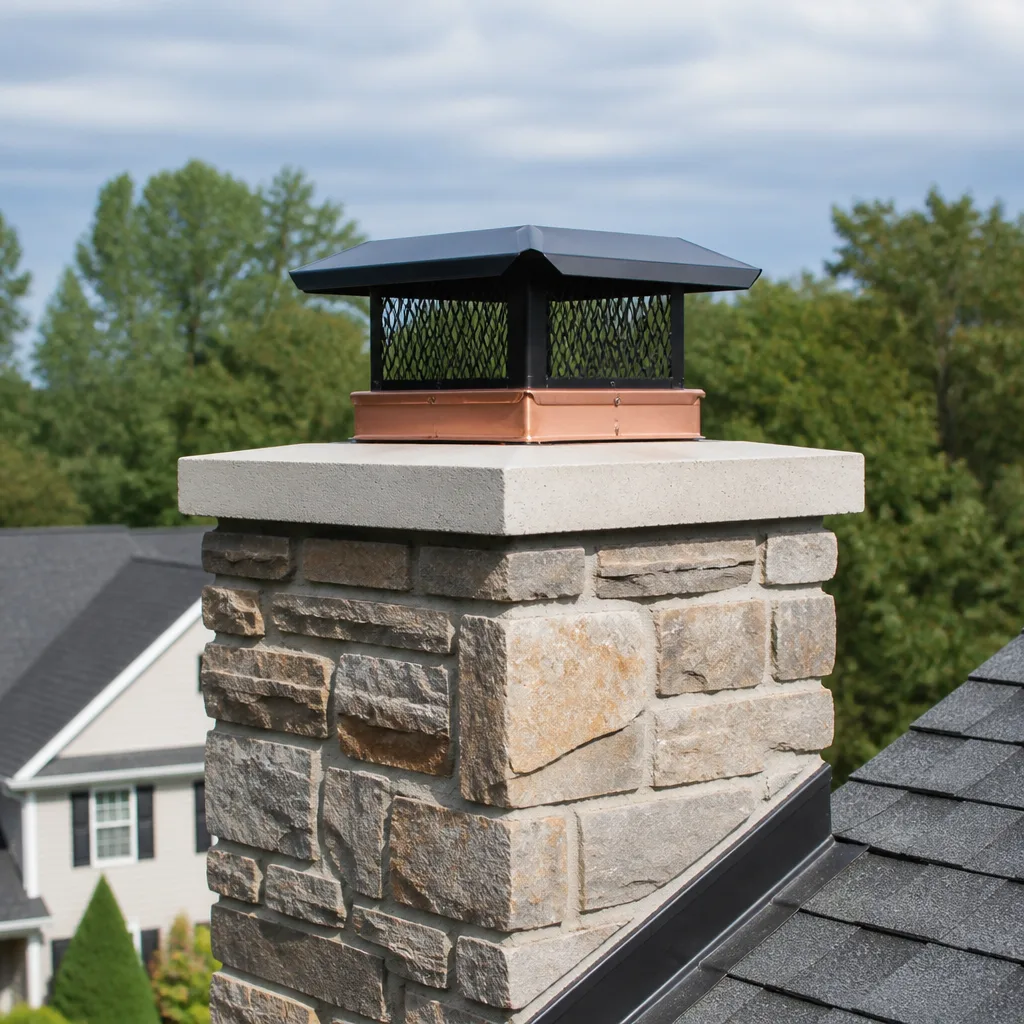 Caps & crowns
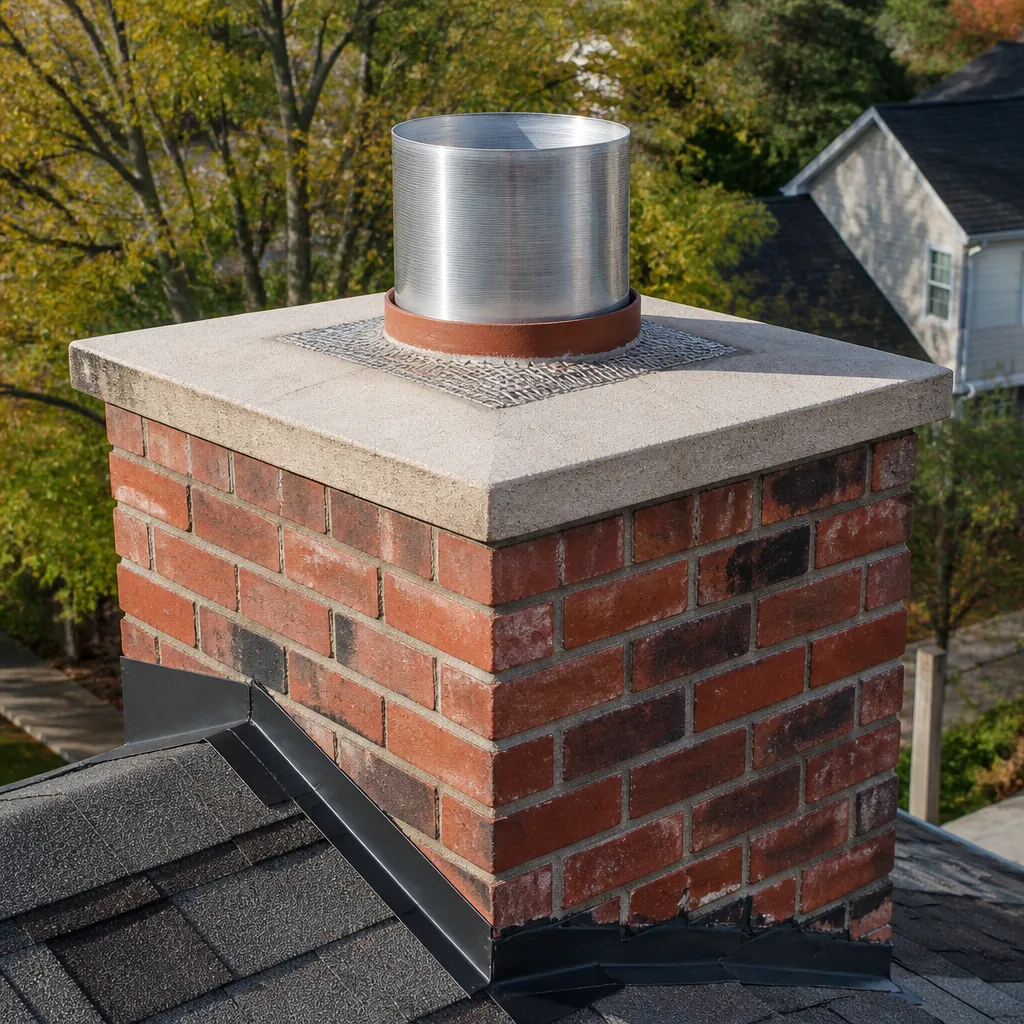 Flue relining
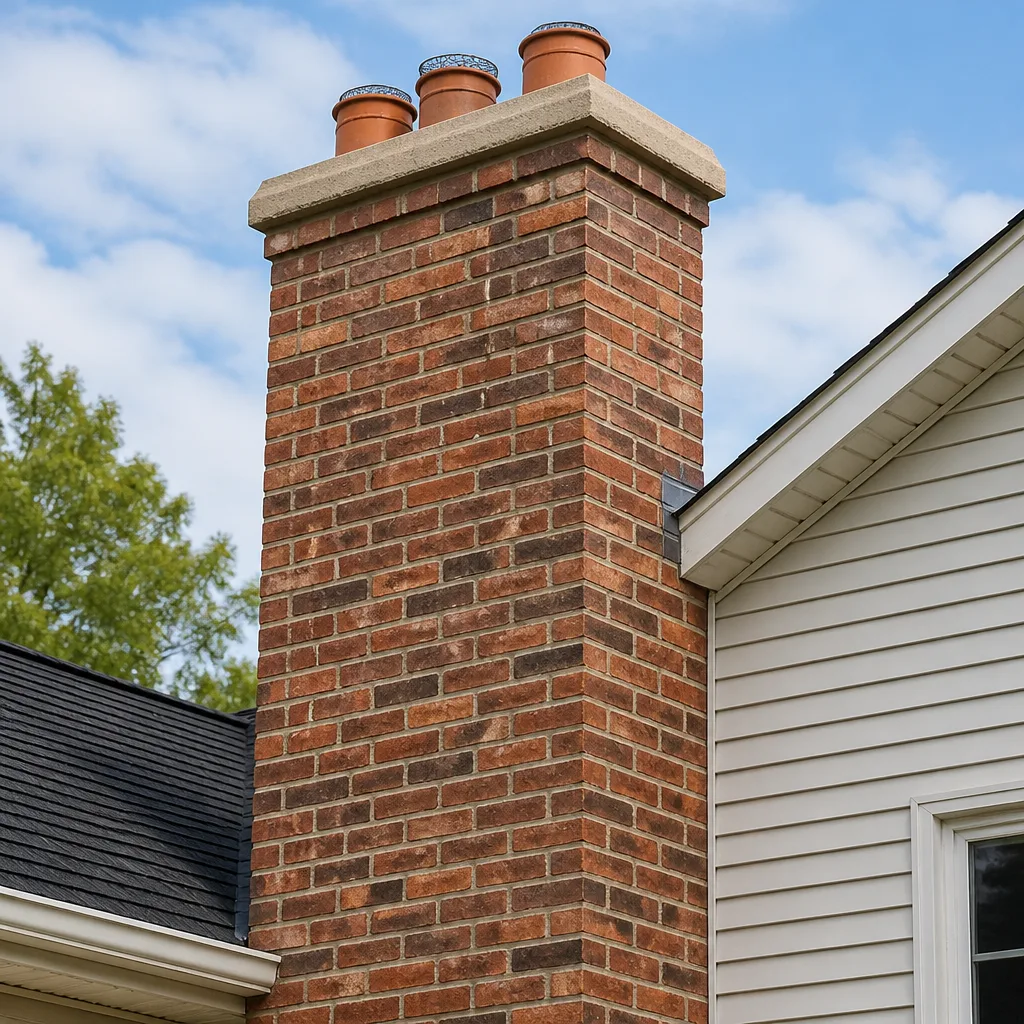 Masonry repair
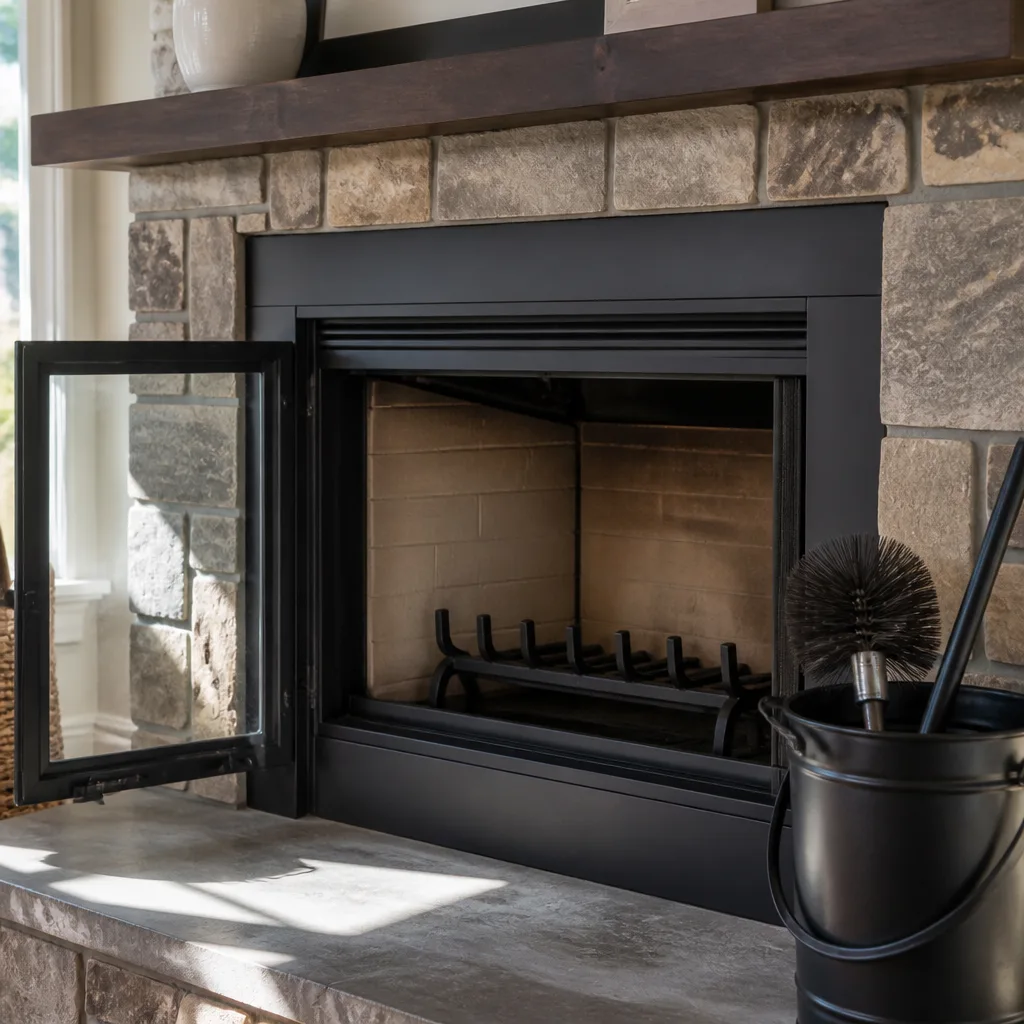 Gas fireplace service
Level 1 sweep and inspection to the NFPA 211 annual standard - flue, crown, cap, and flashing checked and photographed
Chimney sweep logs do not sweep chimneys. They loosen some creosote - which then falls where a brush and vacuum still have to collect it.
DIY vs Professional Chimney Cleaning: The Woodside Homeowner’s Decision Guide
The chimney brush kit you buy online is designed to remove loose soot from a sound flue. It has no way to tell you that the tile liner joint two thirds up has been leaking combustion gas into your wall cavity for two seasons. That gap between cleaning and knowing is where most of this decision actually lives, and it’s the part most homeowners never think about. In this guide we’ll walk through what you can realistically handle yourself, what genuinely requires trade tools and training, and why Woodside’s older terra cotta flue systems make the stakes higher here than in newer construction.
Quick Answer
A physically capable homeowner with the right rods and brush can safely sweep a straight, single-story, sound flue, and that flue still needs inspection by a trained eye. Professional cleaning matters most when the liner is terra cotta tile, the system has any offset or bend, glazed creosote is present, or there’s no documented inspection on file. In Woodside, the age and construction of the housing stock means professional cleaning is the safer default for most homes.
Styles & brands we work with
- Sweep & inspection
- Caps & crowns
- Flue relining
- Masonry repair
- Gas fireplace service
Table of Contents
- What DIY Chimney Cleaning Can Realistically Handle
- Why Terra Cotta Liners Make DIY Riskier in Woodside
- The Equipment Gap: Rod-and-Brush vs Rotary Cleaning
- The Insurance Problem With a Self-Performed Sweep
- The Honest Decision Matrix: Four Variables That Decide It
- What a Professional Woodside Cleaning Actually Involves
- Creosote: The Reason Cleaning Matters at All
- Signs Your Chimney Needs More Than a Sweep
What DIY Chimney Cleaning Can Realistically Handle
Before we get into what goes wrong, it’s worth being honest about what goes right with careful homeowner work. There are maintenance tasks around a fireplace that are genuinely within reach for someone with basic tools and a ladder. We’re not going to pretend otherwise. The trouble starts when maintenance gets confused with cleaning.
Here’s a fair division of what a homeowner can typically do safely and what should be left to a trained technician:
Reasonable DIY tasks:
- Clearing ash and debris from the firebox at the end of the burning season
- Visual inspection of the chimney cap from ground level with binoculars or from a ladder, checking for missing mesh, rusted screens, or nests
- Testing the damper operation by opening and closing it by hand, noting any sticking or looseness
- Sweeping loose soot from the smoke chamber shelf if it’s accessible and the flue is straight
- Checking the firebox for obvious cracks in the brick face or missing mortar joints
Tasks that call for a professional:
- Assessing tile liner condition, hairline cracks, and joint separation
- Removing glazed creosote, which is a hard, tar-like deposit that a consumer brush cannot break down
- Reaching past offsets, smoke shelves, or any flue that isn’t a straight shot
- Evaluating the smoke chamber, which is the sloped transition above the damper
- Determining whether a damaged tile needs repair now or can wait
The line is cleaner than most homeowners expect. The chores are yours. The assessment isn’t.
Why Terra Cotta Liners Make DIY Riskier in Woodside
Much of Woodside’s housing was built in the first half of the twentieth century, and a good share of those homes still carry their original terra cotta flue tiles. These are fired clay sections stacked with mortar joints between them, sitting inside a masonry chase. They’re a robust liner system when they’re intact. When they’re not, they fail in ways that a homeowner can’t easily see.
Terra cotta tile deteriorates slowly and quietly. The failures that matter most in Woodside are:
- Loose or shifted tiles from decades of thermal cycling
- Hairline cracks that form at spalling edges and widen in freeze-thaw cycles
- Separated joints where the mortar has begun to fail, leaving a gap behind the tile face
- Spalling on the tile interior, where flakes of clay break away and collect at the bottom of the flue
A nylon or wire chimney brush dragged through a compromised tile flue can catch on a spalled edge or a shifted joint and turn a hairline crack into a real opening. That’s the mechanism people miss. The brush isn’t doing anything intentionally destructive, but it’s not tuned to the tile condition the way a trained technician works around it. When the tile fails this way, combustion gas has a pathway into the surrounding masonry or, in some layouts, the wall cavity. That’s a carbon monoxide and fire exposure issue that doesn’t announce itself.
In our experience across Woodside, the tile systems that fail worst are the ones that were “cleaned” by the homeowner for years without ever being inspected. The cleaning hid the damage. If you’re not sure what condition your liner is in, a professional inspection is the way to find out, and it’s often included with a chimney sweep.
The Equipment Gap: Rod-and-Brush vs Rotary Cleaning
The consumer chimney brush kit sold online is a polypropylene or wire brush on flexible rods that you thread up the flue and then pull down. It’s designed to knock loose soot off a relatively smooth, sound surface. That’s the entire job it does. It removes what comes off easily.
Professional cleaning uses a rotary system: a motor-driven spinning head with interchangeable brushes matched to the flue surface, tile type, and creosote stage. The rotation is what makes the difference on the surfaces that matter most. Here’s how the two approaches compare on the deposits a Woodside chimney typically has:
- Stage 1 creosote (soft, flaky soot): Both methods remove it. On a sound tile flue, this is genuinely doable by a homeowner.
- Stage 2 creosote (hard, crusty, dry): A rotary head breaks it down. A consumer brush tends to slide over it or scratch the surface without fully removing it.
- Stage 3 creosote (glazed, tar-like, hard as baked-on glaze): Only a rotary system with the right head will break it loose, and sometimes it requires chemical treatment first. A homeowner brush kit cannot touch it.
- Tile surface integrity: A rotary head spinning at low speed on a soft brush is gentler on the tile than a stiff wire brush dragged at force by hand.
Why does it matter for fire risk? Glazed creosote is highly concentrated fuel. It sits on the tile face, adheres, and accumulates until the next hot fire ignites it. Stage 3 creosote is the primary cause of chimney fires. A homeowner who brushes twice, then skips a season because “it looks clean,” is potentially building up exactly the deposit they can’t remove. For a full-system inspection that catches this, see Chimney Sweep Woodside.
The Insurance Problem With a Self-Performed Sweep
Here’s the angle people rarely consider until something happens. Most homeowner policies include language requiring reasonable maintenance of the property. A chimney fire that results in a claim will be reviewed by an adjuster looking for evidence of upkeep. If the sweep was self-performed and there’s no documented inspection on file, the insurer has a much easier case that the loss was avoidable.
What typically counts as documented maintenance:
- Periodic written inspection reports from a chimney professional
- Receipts or logs of cleaning dates
- Photographic evidence of the flue before and after cleaning
- Records of any liner repairs or cap replacements
What a self-performed sweep provides is nothing in writing, usually. Even if you did the work correctly, there’s no third-party record. The homeowner’s exposure isn’t about whether you actually cleaned it; it’s about whether you can prove the chimney was serviced and safe. We’re not saying every claim is denied, and every policy differs, but this is a real asymmetry between a professional sweep and a DIY one. The cost of the sweep is small compared to the negotiating leverage an inspection report provides if you ever need to file a claim.
Professional documentation also transfers with the house. If you sell a Woodside property with a documented maintenance history, that’s tangible value to a buyer’s inspector.
The Honest Decision Matrix: Four Variables That Decide It
If you want a clear way to decide, here are the four variables we actually use in the field. None of them is “do it yourself” or “don’t” in isolation. It’s how they stack up together.
1. Flue age and liner condition. A flue in a newer home with a stainless liner and a straight run is more forgiving. A terra cotta tile flue in a pre-war Woodside home, especially one that’s never been camera-inspected, is not. The older the liner, the less room for error.
2. Fuel type. Gas fireplaces and inserts produce far less creosote. If your system is gas-only, the cleaning interval is much longer and the DIY question is lower stakes. Wood-burning fireplaces are the opposite. Burning unseasoned or wet wood in a wood-burning system accelerates creosote accumulation.
3. Last professional inspection date. If the chimney was professionally inspected within the last one to two years and cleared as sound, a homeowner sweep between professional visits is more defensible. If it’s been five years or longer with no inspection, you’re working blind, and the risk is no longer just about the brush.
4. System complexity. A straight single-story flue is the easiest case. Offset flues, flues with smoke shelves, industrial-style chimney chases, and anything with a prior repair has bends and edges a homeowner rod kit can’t reliably navigate.
If you have any one of these risk flags on its own, it doesn’t immediately rule out DIY. If you have two or more, DIY stops being a reasonable trade. If you don’t know the answers to any of them, that itself is the argument for a professional inspection first.
What a Professional Woodside Cleaning Actually Involves
A professional cleaning is not the same task as a homeowner sweep with better tools. The sequence matters, and the inspection component is where most of the value sits. Here’s how a full-system job typically runs:
- Set up and protection. Drop cloths, a work mat, and a HEPA vacuum at the firebox. The goal is no visible dust in the room.
- Firebox and smoke chamber cleaning. Loose ash and debris removed, then the smoke chamber shelf and damper area cleaned. The smoke chamber is where a homeowner brush rarely gets.
- Flue cleaning with the matched head. The rotary head is selected for the flue type, brushed through from the top, and worked progressively down. The technician is watching for tile spalling, joint separation, and heavy creosote staging as they go.
- Visual and camera inspection. A video camera run down the flue reveals the condition of the tile along its full length. This is what lets the technician say “your tile joint at this height is separated” instead of “it looks clean.”
- Exterior check. Cap, crown, and flashing condition, from the roof and from the ground. A damaged cap is often the source of water intrusion into the flue.
- Written report. Findings, photos or video, and a clear recommendation on what’s urgent, what can wait, and what would benefit from a proactive fix.
For the exterior half of that job, chimney cap & crown repair is often the difference between a dry flue and a wet one. We install Famco caps and other trade-grade products so a damaged cap gets fixed on the same visit rather than scheduled for later. If the fireplace itself is showing cracks or smoke issues in the firebox, that’s fireplace repair and worth addressing alongside the sweep.
One important note on liner condition: not every compromised flue needs a full reline. We use HeatShield, a specialized resurfacing system that restores a deteriorating flue to a sound surface without full liner replacement. It’s less invasive and less expensive than a reline, and most generalist handymen don’t carry it. When a reline is the right answer, we install DuraFlex stainless liner systems. Our technicians have up to 9 years of experience assessing which is which.
Creosote: The Reason Cleaning Matters at All
Everything above comes back to one substance. Creosote is the residue left behind when wood smoke cools in the flue. It forms in three stages, and each stage is progressively harder to remove and more flammable. In Woodside’s climate, where burning season runs through the colder months and many fireplaces are used steadily, the accumulation is real.
The three stages, in plain terms:
- Stage 1: Soot and flaky deposits. Easily brushed. Still needs cleaning because it restricts draft.
- Stage 2: Hard, crusty deposits that adhere to the tile face. Requires a rotary head or chemical treatment.
- Stage 3: Glazed, tar-like deposits. Hard as ceramic. The primary fuel source for chimney fires.
The National Fire Protection Association recommends chimneys be inspected annually and cleaned as needed. That’s the most quoted standard in the trade for a reason: annual inspection is the only reliable way to know what stage you’re at. The inspection cost is small; the alternative is finding out during a fire.
Wood species matters too. Seasoned hardwood burned hot produces less creosote than damp wood burned slowly. Many Woodside residents have fireplaces that are used mostly on weekends and holidays; those slow, cool fires are the ones that deposit the most creosote. The chimney that’s used least is often not the cleanest one.
Signs Your Chimney Needs More Than a Sweep
Some signals go beyond routine maintenance and point to a structural or liner issue. If you notice any of these, a professional inspection should come before another DIY attempt:
- A strong, sharp creosote smell in the room even when the fireplace is not in use, which can indicate heavy deposit or a draft problem
- Smoke rolling back into the room when the fire is lit, suggesting a blockage or a draft issue
- Visible cracks in the firebox brick, or missing mortar at the firebox joints
- Staining or efflorescence on the chimney exterior, which can point to water intrusion from a failed crown or missing cap
- White or black staining near the top of the flue, indicating incomplete combustion or severe creosote
- Any flaking or falling material inside the firebox, which could be spalled tile or mortar from above
- A prior chimney fire that was put out (even by the fire department) without proper inspection afterward
Each of these has a specific cause and a specific fix. The mistake is to sweep it away and hope the symptom doesn’t return.
Common Mistakes to Avoid
- Sweeping a flue you haven’t inspected. Without knowing the liner condition, a brush can turn a hairline tile crack into a gas leak path. In a pre-war Woodside home, that’s the single most common failure we see.
- Assuming a “clean-looking” flue is a safe flue. Glazed creosote can be invisible from the firebox opening. Only a camera run and a look from the top reveals it.
- Skipping the annual inspection because the sweep is done. Cleaning and inspection are different jobs. You can have a clean flue with a separated tile joint and never know it.
- Using a wire brush on a terra cotta flue. Stiff wire on a spalled tile edge accelerates damage. Soft polypropylene heads or rotary heads are the correct tool for tile.
- Ignoring a damaged cap through the off-season. A missing cap lets rain and animals into the flue. Water and nesting material are among the most common causes of a flue that needs repair instead of just cleaning.
- Burning wet or unseasoned wood in a Woodside fireplace. Damp wood deposits far more creosote. Buy seasoned wood and store it dry.
- No written record. A homeowner who cleans the flue twice a year but can’t prove it has less protection than one who schedules a documented annual inspection.
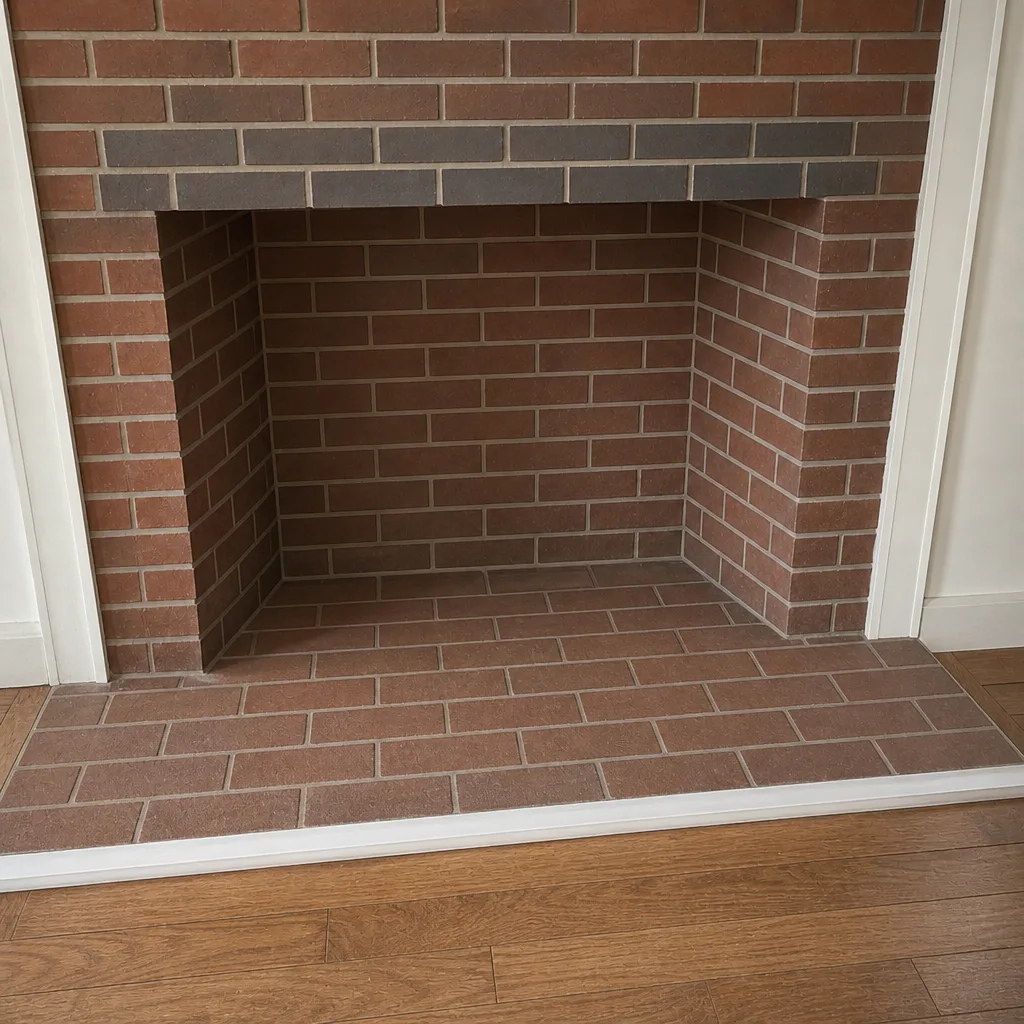
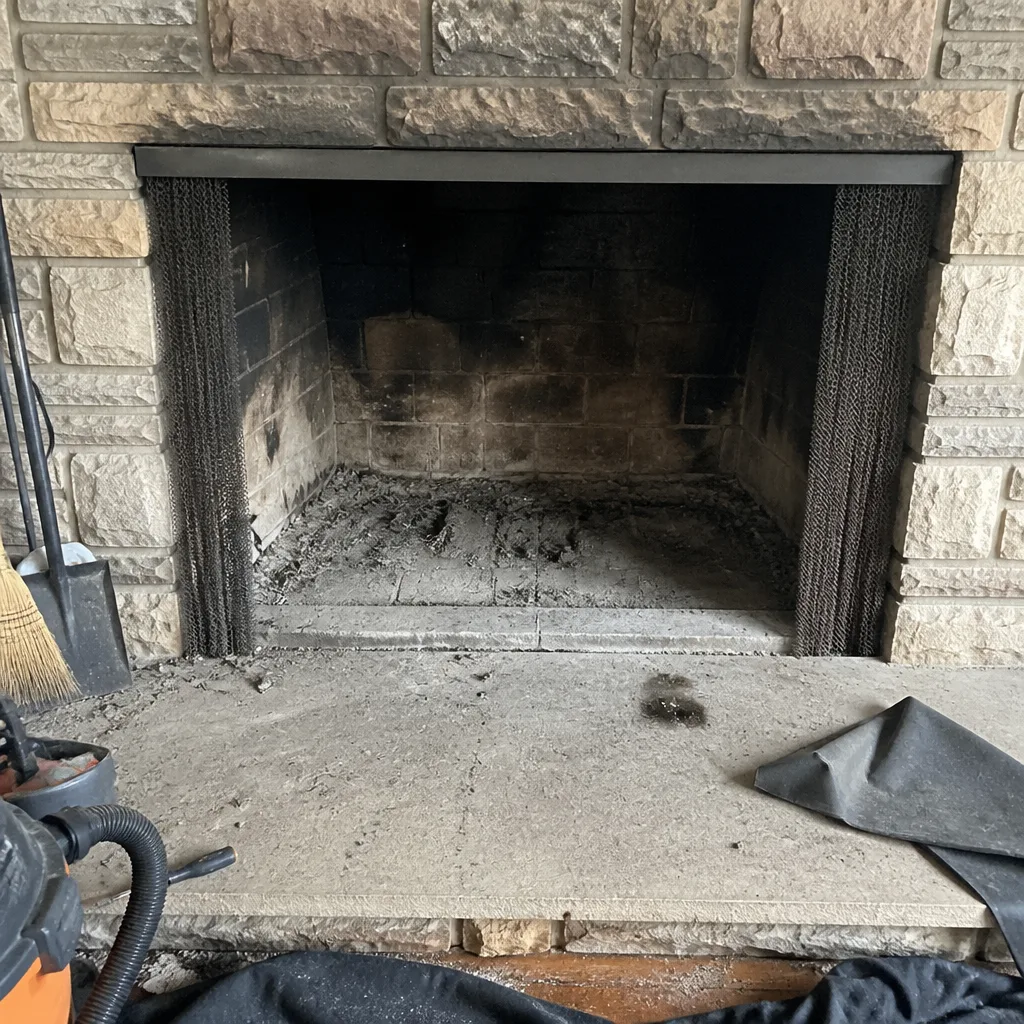
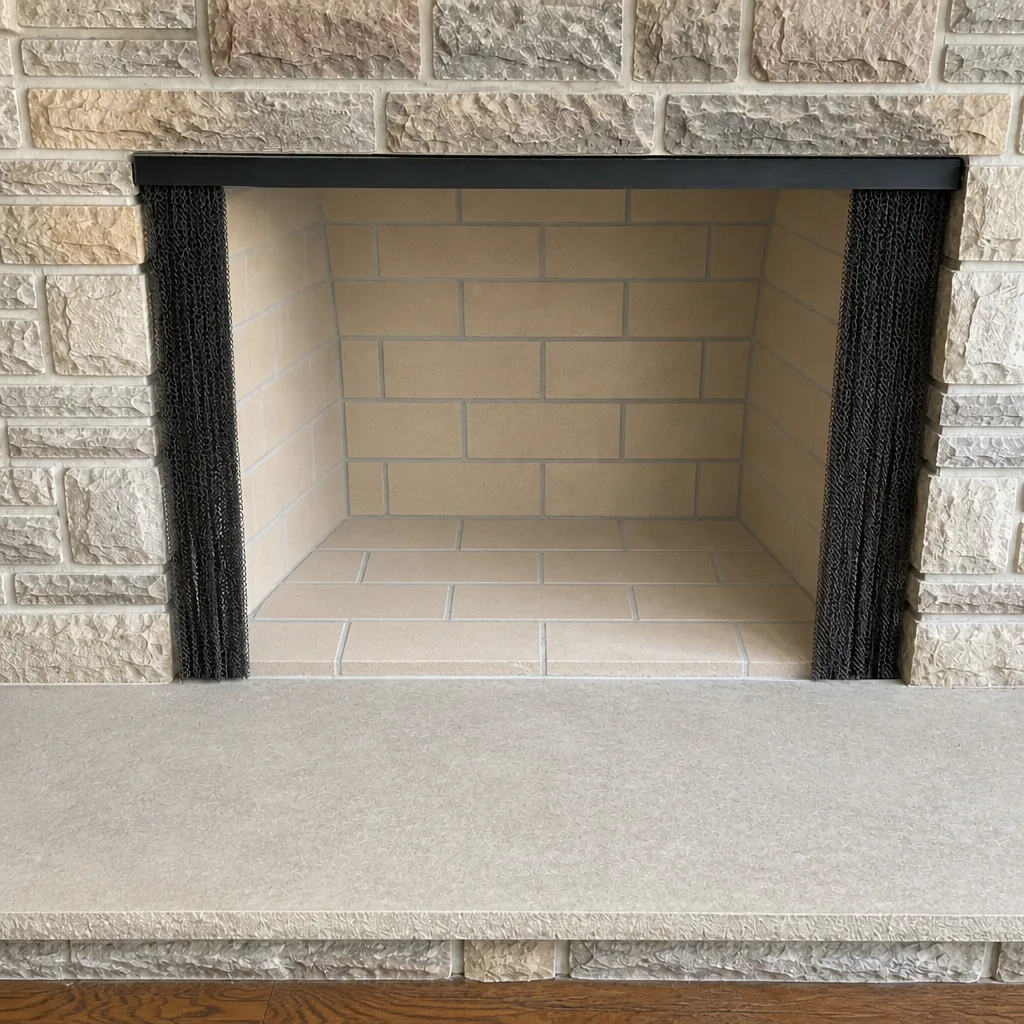
See the difference
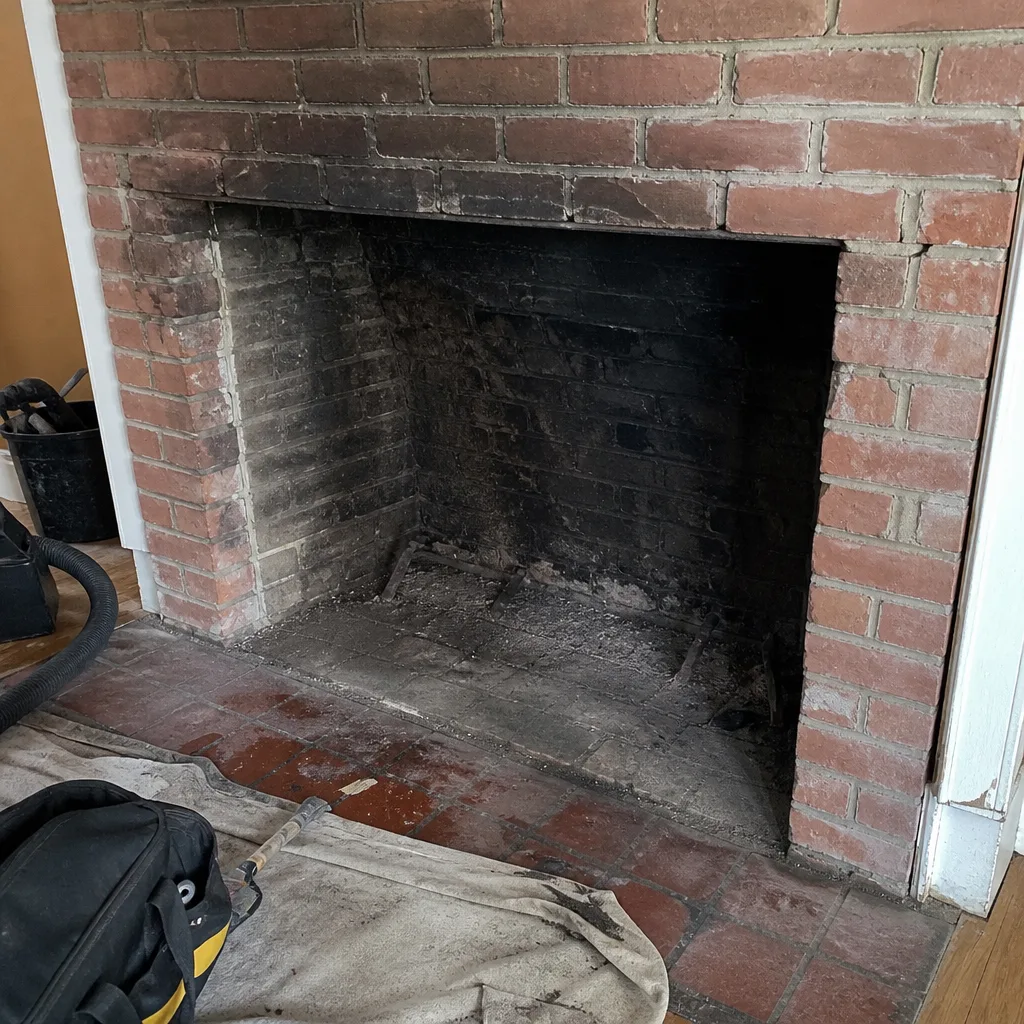 Before
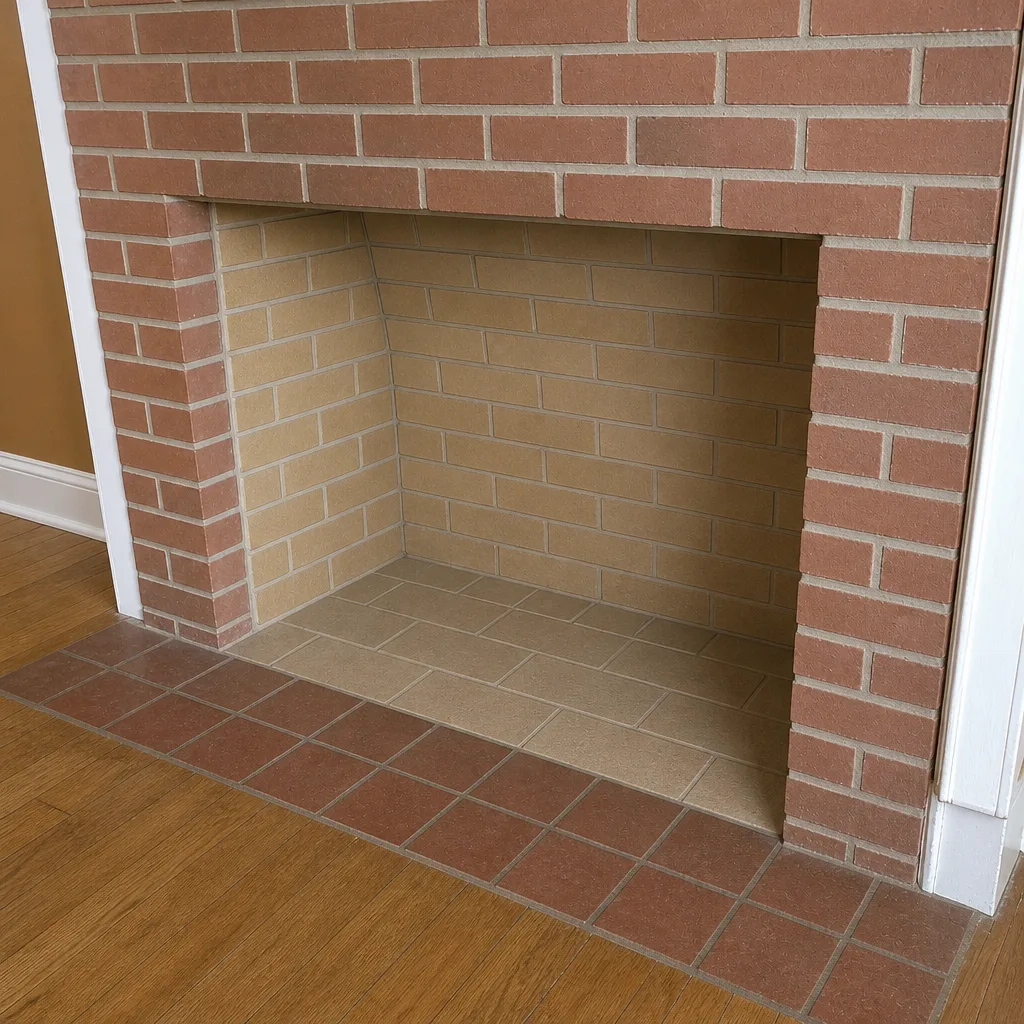 After
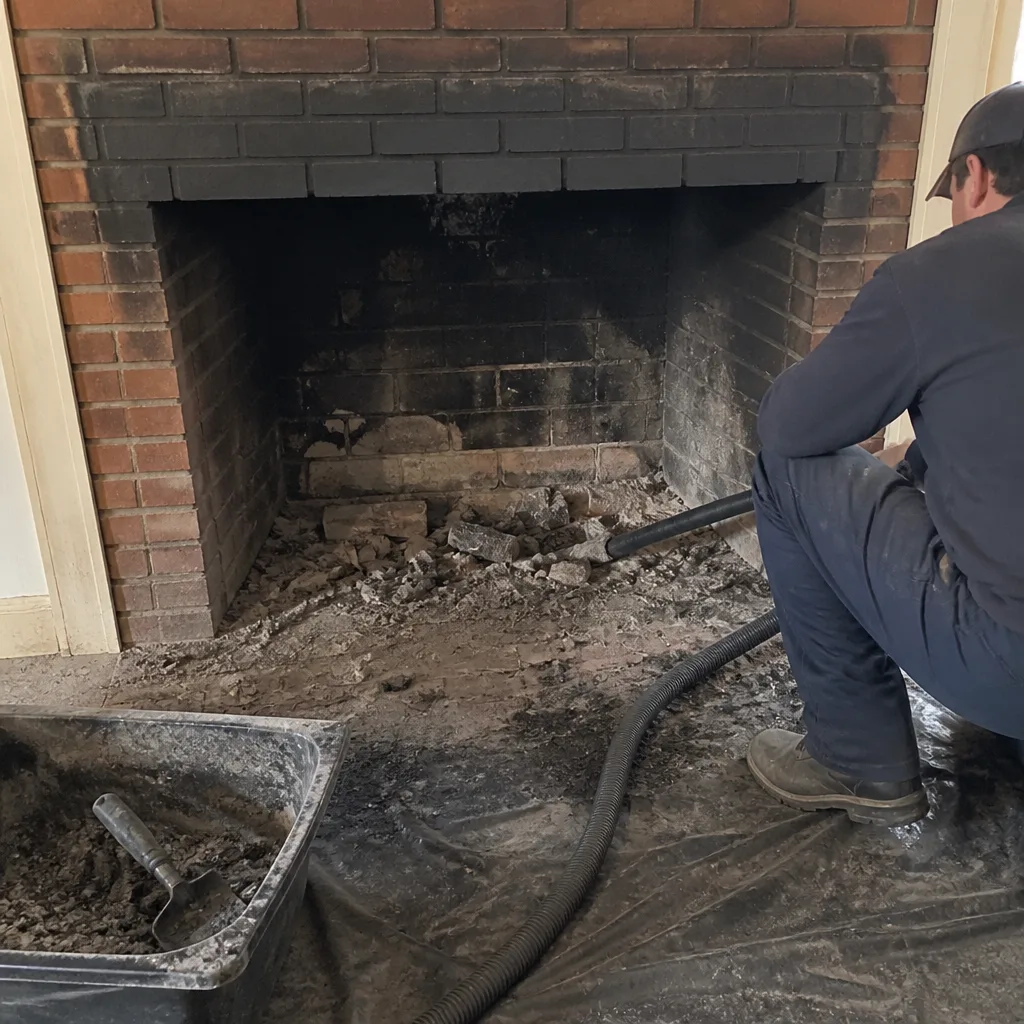 Before
 After
 Before
 After
When to Call a Professional
Call a professional when any of these applies: the flue is terra cotta tile in a pre-war Woodside home and has never been camera-inspected; there’s a strong creosote smell or any glazed deposit visible; the system has an offset, a smoke shelf, or a prior repair; a chimney fire has ever occurred; you’re buying a home and need the flue assessed before closing; or you simply don’t know when the last professional inspection happened. Chimney Sweep Woodside offers free estimates in Woodside for all of those. Call (855) 550-7639. We answer 24/7. Fast dispatch from 7am to 7pm, Sunday through Friday. The estimate is free and the price is set per job by the written estimate, so you’ll know the number before any work starts.
Frequently Asked Questions
You can safely handle firebox debris, cap visual checks, and damper tests on any chimney, and you can sweep a straight single-story flue with a consumer rod-and-brush kit if the liner is sound. What you can’t do with that kit is assess liner condition, reach past offsets, or remove glazed creosote. In Woodside’s older terra cotta tile systems, that gap matters more than in newer construction, so professional inspection is the safer default for most homes. Call (855) 550-7639 for an exact quote on a full inspection and sweep.
The general standard is annual inspection with cleaning as needed, and that holds for Woodside. Wood-burning fireplaces used regularly should be inspected once a year; gas fireplaces can typically go longer between cleanings but still benefit from periodic inspection. If you burn wet wood or use the fireplace heavily during the cold months, err toward the annual visit. Call (855) 550-7639 to book an inspection.
A self-performed sweep with no documented inspection gives your insurer a much easier case that the loss was avoidable. Most policies require reasonable maintenance, and an inspection report is your evidence that maintenance happened. If a claim ever follows a chimney issue, that report is what you’ll want on file. The sweep is the cheaper half of the decision. Call (855) 550-7639 for an inspection that produces a written report.
Yes, if the liner is already compromised. A stiff wire brush dragged through a flue with spalled tile edges or separated joints can catch on the damage and widen it. The result can be a pathway for combustion gas into the masonry or wall cavity. That’s why liner condition should be known before any brushing, and why a professional sweep includes a camera inspection that a homeowner kit cannot. Call (855) 550-7639 for a full-system assessment.
Glazed creosote is hard, tar-like, and bonded to the tile face; a hand-dragged brush generally slides over it or scratches the surface without breaking it loose. A rotary cleaning system with the correct head, sometimes with chemical pretreatment, is what removes it. Glazed creosote is the primary fuel for chimney fires, so this isn’t a deposit you want to leave in place. Call (855) 550-7639 for an inspection and a straight answer on what your flue has.
Not always. A cracked or deteriorating flue can sometimes be restored with HeatShield, a specialized resurfacing system that seals the flue without full replacement. Full reline, typically with a DuraFlex stainless system, is the right answer when the tile damage is beyond resurfacing. A camera inspection tells you which situation you’re in. Call (855) 550-7639 and we’ll tell you what we find and what it means.
The Bottom Line
DIY chimney cleaning isn’t reckless across the board. A homeowner with a sound, straight flue can sweep loose soot between professional inspections and do no harm. The line is at assessment: tile condition, glazed creosote, offsets, and the smoke chamber are outside what a consumer kit can reach or evaluate. In Woodside’s older terra cotta systems, that line gets crossed quickly, and the consequences of a missed tile crack or hidden creosote buildup are not small. If you know your flue is sound and recently inspected, a homeowner sweep is reasonable. If you don’t, the inspection should come first. Call (855) 550-7639 for a free estimate on a full-system clean and inspection. We answer 24/7, with fast dispatch from 7am to 7pm, Sunday through Friday. We’ll tell you exactly what we find and what it means for your home’s safety.
Written by the team at Chimney Sweep Woodside.