
Last updated November 25, 2026
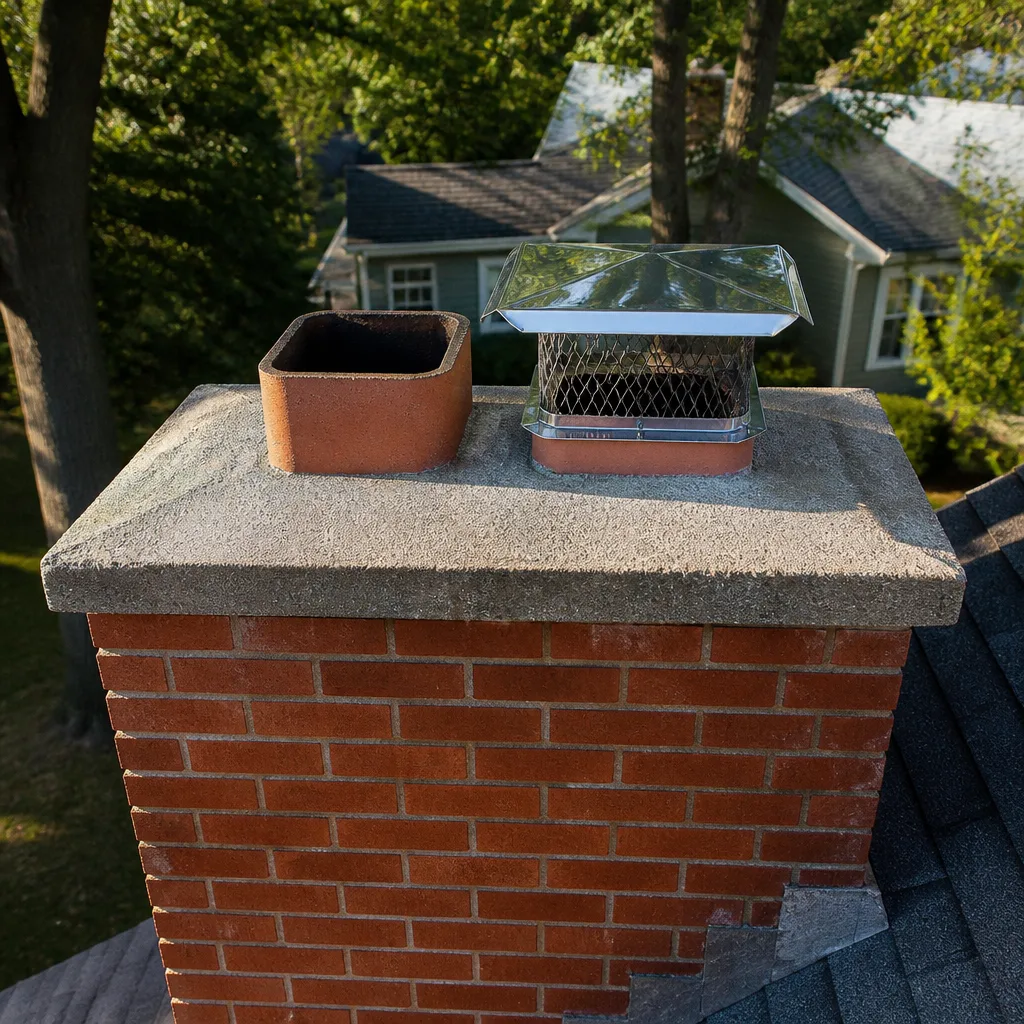 Sweep & inspection
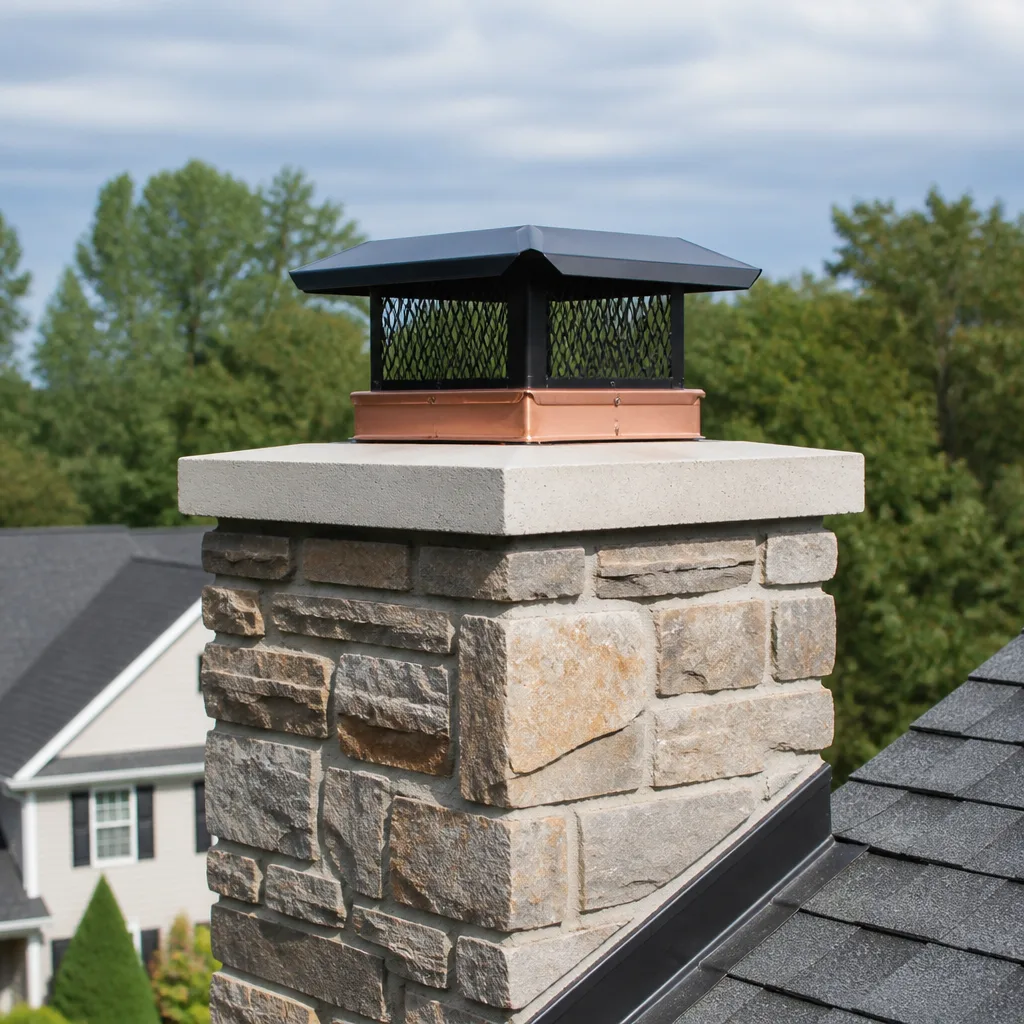 Caps & crowns
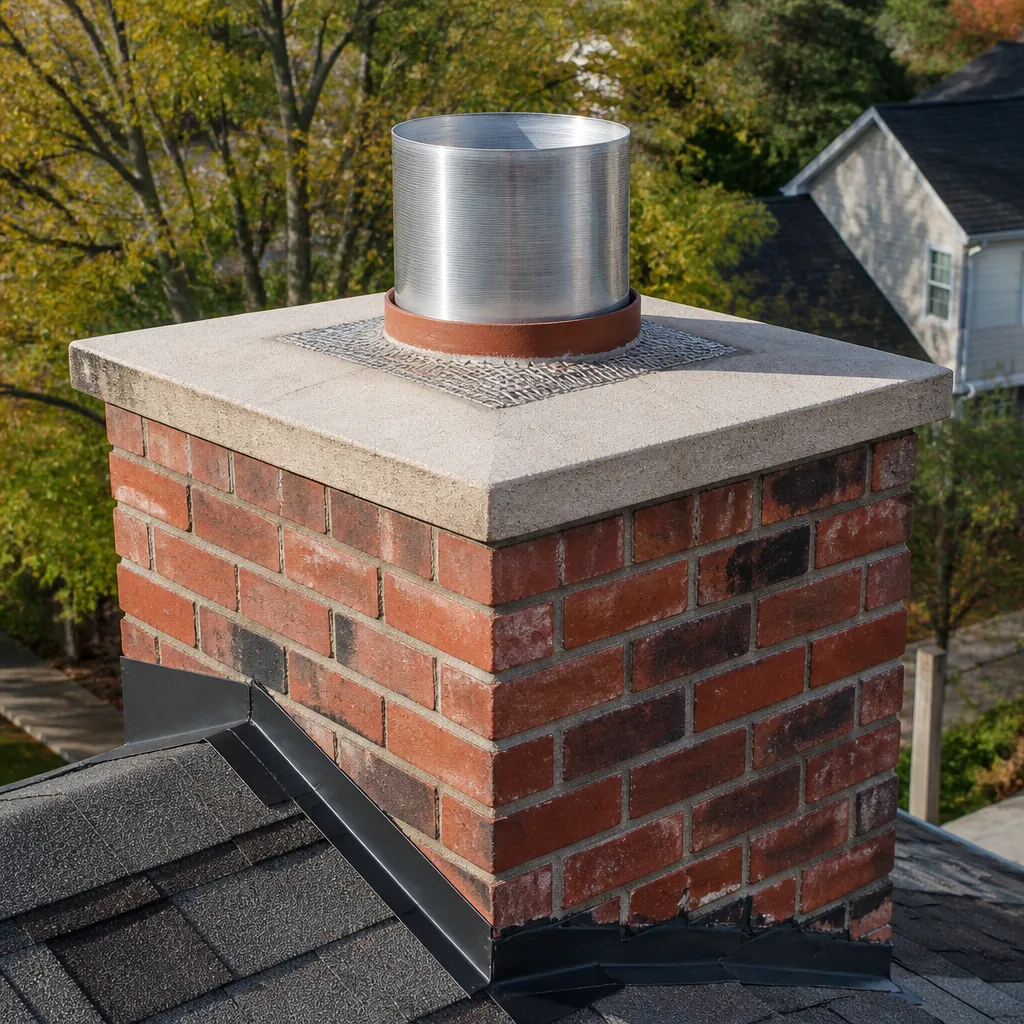 Flue relining
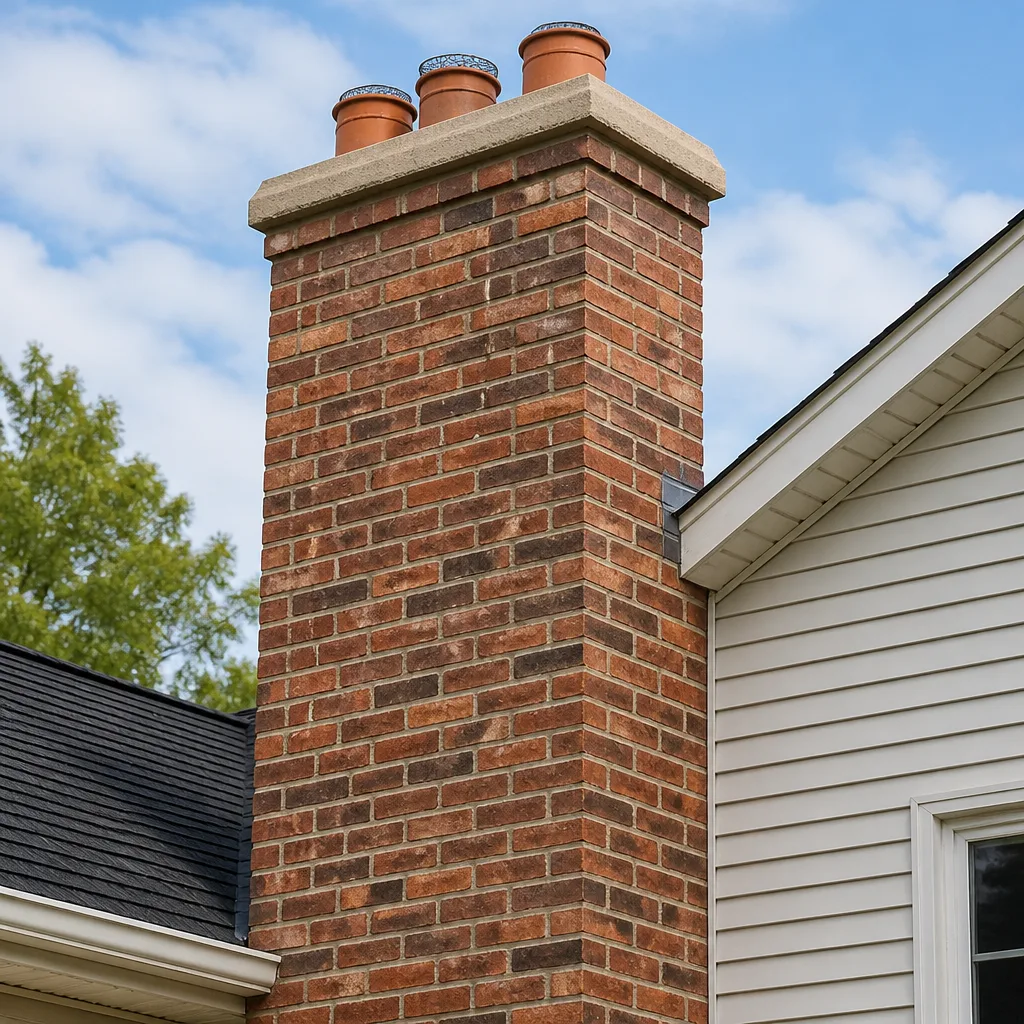 Masonry repair
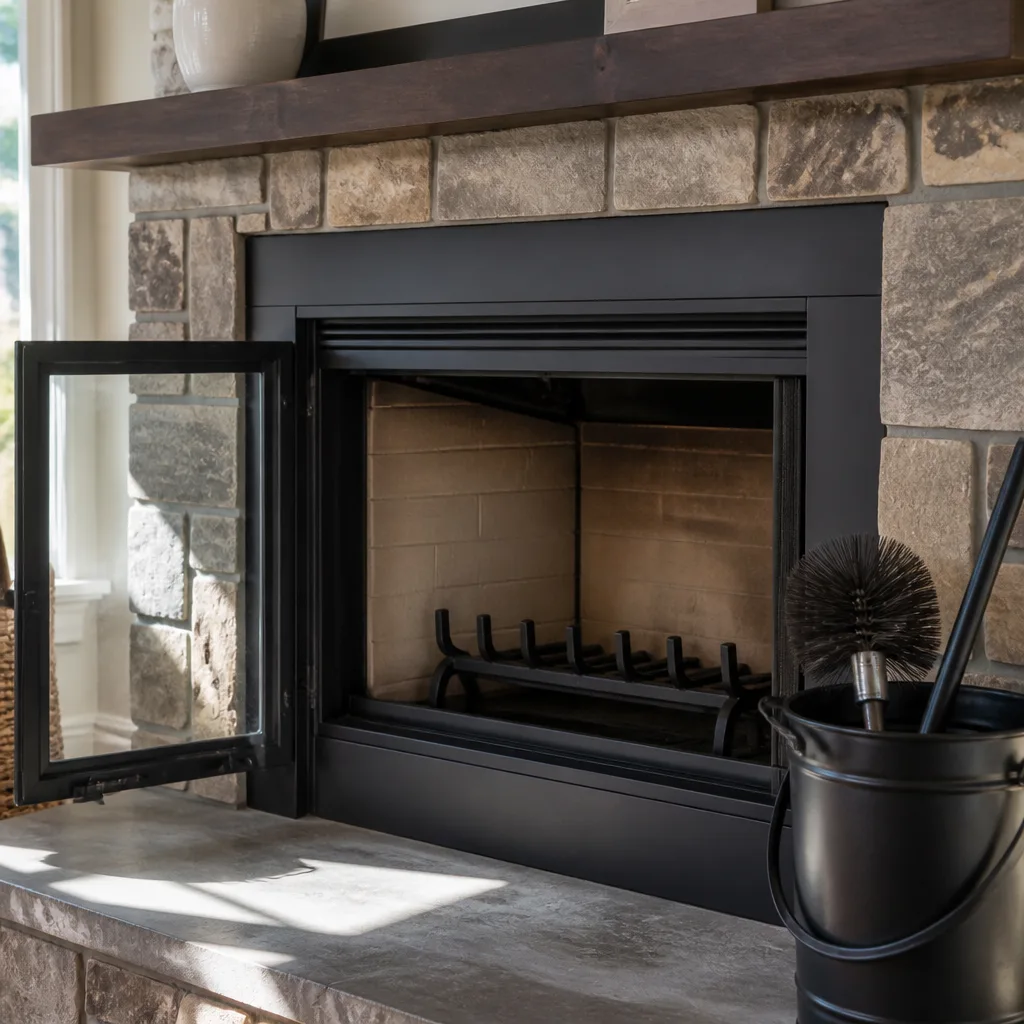 Gas fireplace service
Level 1 sweep and inspection to the NFPA 211 annual standard - flue, crown, cap, and flashing checked and photographed
Chimney sweep logs do not sweep chimneys. They loosen some creosote - which then falls where a brush and vacuum still have to collect it.
Chimney Cleaning Warning Signs: A Woodside Homeowner’s Reference Guide
A white efflorescence stain on your chimney’s exterior isn’t a cosmetic issue. It’s your masonry telling you that water is moving through the structure and carrying dissolved salts outward, which means active moisture intrusion is already happening behind the brick face. Most homeowners see that white powder and assume it’s leftover mortar or a harmless stain. Meanwhile, the water behind it keeps working. The same problem with chimney symptoms is that they’re rarely honest. A smell in the firebox could mean three different things. A stain could mean two. This guide decodes each symptom into its likely cause and its repair urgency, so Woodside homeowners know when to call immediately and when to keep watching.
Quick Answer
The warning signs that mean “stop using the fireplace until it’s inspected” are: a strong acrid or chemical smell when the fire is burning, smoke rolling into the room at low fire or on calm days, visible gaps or cracks in the flue liner, dark staining around the damper assembly, and sulfurous or exhaust smells when the fireplace isn’t in use. Signs that can usually be monitored with a scheduled inspection include light efflorescence, minor hairline crown cracks, and small rust spots on a cap. Anything that involves actual creosote accumulation or moisture reaching the firebox should be looked at within the same week.
Styles & brands we work with
- Sweep & inspection
- Caps & crowns
- Flue relining
- Masonry repair
- Gas fireplace service
Table of Contents
- What Does That Smell Actually Mean?
- Reading Your Chimney From the Outside
- Interior Firebox Signals Most Homeowners Miss
- Why Your Fireplace Suddenly Smokes on Cold Days
- The Urgency Triage: Same-Week vs. Do-Not-Use
- Why Woodside Chimneys Show These Signs Sooner
- Common Mistakes to Avoid
- When to Call a Professional
What Does That Smell Actually Mean?
Smell is the most complex chimney symptom because the same “bad smell in the firebox” complaint can point to three completely different root causes, each with its own urgency level. Homeowners in Woodside often describe them interchangeably, but a trained ear catches the difference immediately. Here’s how to decode what your nose is telling you.
Musty and earthy. That smell is moisture. It typically means water is entering the chimney somewhere along its path and settling in the firebox or behind the damper, where it stays damp because there’s no airflow. In our experience, a musty firebox smell almost always traces back to the chimney crown, a failed cap, or a flashing leak at the roof line. Moisture that stays in the structure long enough will start degrading mortar and, in older Woodside homes, the softer brick inside the firebox.
Sharp, acrid, or chemical. That’s creosote off-gassing. Creosote is the byproduct of incomplete wood combustion, and when it builds up on the flue walls, it can release an astringent smell long after the fire has gone out. This smell is the one that most directly signals a sweep is overdue. Creosote is also the material that fuels chimney fires, so a persistent acrid smell deserves attention now, not next season.
Sulfurous or “exhaust-y.” That’s a draft problem, not a cleaning problem. When your chimney’s pressure balance is off, combustion gases can be pulled back down the flue instead of exhausting outside. This is a carbon monoxide concern. It is not a smell you should ever wait on.
If you can’t tell which category your smell falls into, that’s normal. The honest answer is that only a physical inspection separates a musty crown leak from an acrid creosote buildup. A proper chimney sweep visit gives us a view of the whole flue and lets us tell you exactly which one you have.
Reading Your Chimney From the Outside
A chimney that’s failing from the inside usually shows it from the outside first. Woodside’s housing stock is largely mid-century brick and stucco construction, so the exterior of a chimney is often the most accessible diagnostic surface we have. Here’s what each visible cue means and what it costs you to ignore it.
- White efflorescence. Dissolved salts drawn outward by water moving through the masonry. It means active moisture intrusion, not just age. Left alone, the salts crystallize inside the brick and turn into spalling.
- Spalling brick. Flaking or crumbling brick faces. This is the next stage after efflorescence. The brick is physically breaking apart because of freeze-thaw cycling of trapped water.
- Crown cracking. The crown is the concrete cap at the very top of the chimney. Hairline cracks are common. Cracks wide enough to catch a fingernail let water straight into the flue structure.
- Rusted cap or flashing. Rust streaks on the cap mean the metal is beyond its protective life. Rusted flashing at the roof line means water is entering where the chimney meets the roof.
- Missing mortar joints. Soft or receding mortar between bricks is the first structural cue. It’s a normal maintenance item, but once the mortar is gone, the bricks can shift.
- Tilted or separated sections. A chimney visibly leaning away from the house is a stop-and-inspect condition. That is a structural issue and requires a professional diagnosis immediately.
Crown repair and cap installation are often addressed in the same visit once we’re on the roof, which is one reason we install Gelco and Copperfield components during structural work rather than scheduling a return trip. If the inspection reveals that a cap or chimney cap & crown rebuild is needed, we handle that alongside the inspection findings so you aren’t coordinating two separate contractors.
Interior Firebox Signals Most Homeowners Miss
The firebox is where the earliest warning signs live, and it’s the area most Woodside homeowners look at every day without actually seeing. Before you light another fire, spend two minutes with a flashlight on these five points.
- Open the damper and look up. You’re looking for even coloration on the flue walls. Black, glossy, or bubbled creosote means the flue needs sweeping before the next fire. Grey or powdery creosote is lower risk but still indicates buildup.
- Look for gaps or cracks in the flue liner. Even small gaps between liner sections are dangerous because they allow hot gases and combustion byproducts to reach the masonry behind the liner. A Camera inspection shows these clearly.
- Check staining above the damper. Dark streaks climbing above the damper assembly mean either smoke has been rolling back into the firebox (a draft problem) or water is running down the flue. The pattern of the stain tells us which.
- Inspect the firebrick. Missing mortar, cracked firebricks, or a visible gap between the firebox and the surround are all repair signals. Firebox cracks open the door to heat escaping into the structure.
- Look at the smoke shelf. Debris piled on the smoke shelf behind the damper is a sign that birds, squirrels, or chimney swifts have been active. The debris itself is not the main issue. The animal entry points above it are.
If you spot any of these on your own, that’s useful information to bring to an inspection. If the liner has visible gaps or the firebox has structural cracks, that’s a do-not-use-until-inspected situation, and a call is warranted right away. Our technicians have up to 9 years of experience diagnosing exactly these patterns, and we photograph what we find so you can see it for yourself.
Why Your Fireplace Suddenly Smokes on Cold Days
A fireplace that used to draw fine and now smokes into the room when it’s cold outside, or on windy days, or when the kitchen exhaust fan kicks on, is almost always reacting to a pressure problem, not just a dirty flue. Draft is a balance between the temperature of the air inside the house, the temperature outside, the height of the flue, and the amount of air the house is pulling in from other sources.
In Woodside, that balance is often disrupted by something specific: tighter modern windows and doors added to older homes. A house that used to leak air freely now holds it, so when a bathroom fan, dryer, or kitchen hood pulls air out of the house, the fireplace’s chimney becomes the easiest path for replacement air to come back in. That’s called negative pressure, and it pulls smoke down the flue instead of up.
Draft changes can also come from:
- A dirty flue reducing the effective diameter of the chimney
- A missing or corroded cap letting wind disturb the top of the flue
- Adjacent trees or a taller neighboring structure creating a downdraft
- A blocked flue from animal nests or debris
- A chimney that’s too short for the current roofline after a home addition
The way to tell which one is yours is to test draft behavior during an inspection, not to guess from a distance. A flue that smokes only in specific conditions is usually a fairly simple fix once the cause is identified. A flue that smokes in every condition is more urgent.
The Urgency Triage: Same-Week vs. Do-Not-Use
The most useful thing this guide can do for a Woodside homeowner is translate “this seems bad” into “this is how fast you need to act.” Here’s our triage framework, organized by urgency level.
Do not use until inspected
- Any smell of sulfur, exhaust, or combustion gas when the fireplace is not in use
- Smoke rolling into the room consistently, especially at low fire
- Visible gaps, cracks, or missing sections in the flue liner
- Bubbled, glossy, or thick black creosote on the flue walls
- A chimney that’s visibly leaning or has separated from the house
- Persistent headaches or dizziness when the fireplace is in use
Same-week service recommended
- Musty smell in the firebox (moisture intrusion)
- Active efflorescence on the exterior
- Crown cracks wide enough to allow water in
- Rusted cap, flashing, or firebox components
- Cracked firebrick or missing firebox mortar
- A creosote smell strong enough to notice from outside the firebox
Schedule on your normal maintenance cycle
- Hairline crown cracks with no sign of water penetration
- Light grey or powdery creosote accumulation
- Minor rust spots on cap that aren’t yet affecting flue draw
- Occasional draft issues that resolve on their own
The list is not a substitute for an inspection, but it does give you a starting point. Camera inspection and photo documentation come with every assessment, so you’re never asked to take our word for what’s happening inside the flue.
Why Woodside Chimneys Show These Signs Sooner
Woodside is a neighborhood of brick and stucco homes, many dating to the mid-century, built when chimneys were expected to last forever and rarely were. That construction era means two things for chimney owners here. First, many flues were built with materials that have a defined lifespan, and they’re now at the end of it. Second, the exterior masonry was often laid with a decorative or semi-structural crown that’s been slowly cracking under weather cycles for decades.
The other factor is the tree canopy. Woodside’s mature street trees are a benefit for the neighborhood’s feel, but they drop constant debris onto roofs and into chimney flues, and they hold moisture against chimney masonry a good deal longer than open sky would. Chimneys that sit in shade and stay damp age faster than chimneys in full sun. That’s a real difference in how quickly efflorescence, spalling, and crown cracking show up on a Woodside chimney versus one in a more open lot.
Our approach at Chimney Sweep Woodside is to look at the full system, not just the flue opening. A sweep that only clears creosote and leaves a failing crown in place is a missed diagnosis. We separate the cleaning question from the structural question so you know what each one costs and what can safely wait. When a flue shows deterioration, we sometimes use HeatShield to resurface the liner rather than jumping straight to a full replacement; the right call depends on the specific condition, and a camera view is what makes that decision possible. HeatShield also uses trade-grade materials, and we stock DuraFlex and Copperfield components for liner and cap work so that routine repairs are not delayed by parts sourcing.
Common Mistakes to Avoid
- Assuming a chimney needs sweeping only if it’s dirty on the outside. A chimney can look clean from the street and still have a flue full of creosote. The outside tells you nothing about the inside.
- Skipping the camera inspection to save a step. Creosote removes easily; a hairline crack in the liner does not. Without a camera view, the actual condition of the flue is unknown no matter what the sweep looked like.
- Treating efflorescence with bleach or a sealant. Both can trap moisture in the masonry and make the underlying problem worse. The fix is at the water source, not the surface.
- Burning unseasoned or wet wood as a shortcut. Wet wood produces more creosote per hour of burn than properly seasoned wood. In Woodside, the difference can show up in your flue in a couple of seasons.
- Ignoring draft complaints because the fire “eventually catches.” A fire that starts slowly and smokes briefly every time is signaling a pressure or blockage problem that isn’t going to fix itself.
- Putting off an inspection after an animal sighting at the flue cap. Nesting debris is not just a blockage. The entry point usually means the cap is compromised, and that’s a fast path to water intrusion.
- Assuming a general handyman can handle chimney repairs. Chimney work uses specific trade-grade materials – liner systems, crown sealants, caps designed for flue exposure – that generalists rarely carry. A short visit from the wrong contractor often means a second call.
When to Call a Professional
Call a professional for anything on the do-not-use list above, but also call when you’re simply unsure. A smell you can’t name, a draft pattern you can’t explain, or a small stain that’s grown over the course of a season are all good reasons to get someone on site who can look at the full system and give you a real answer. We don’t recommend liner or masonry work without showing you the camera footage of the condition that justifies it, and we’ll tell you plainly when a repair can safely wait another season.
Chimney Sweep Woodside offers free estimates in Woodside – call (855) 550-7639. We answer 24/7 with fast dispatch from 7am to 7pm, Sunday through Friday. One company, every chimney service – sweep through structural repair.
See the difference
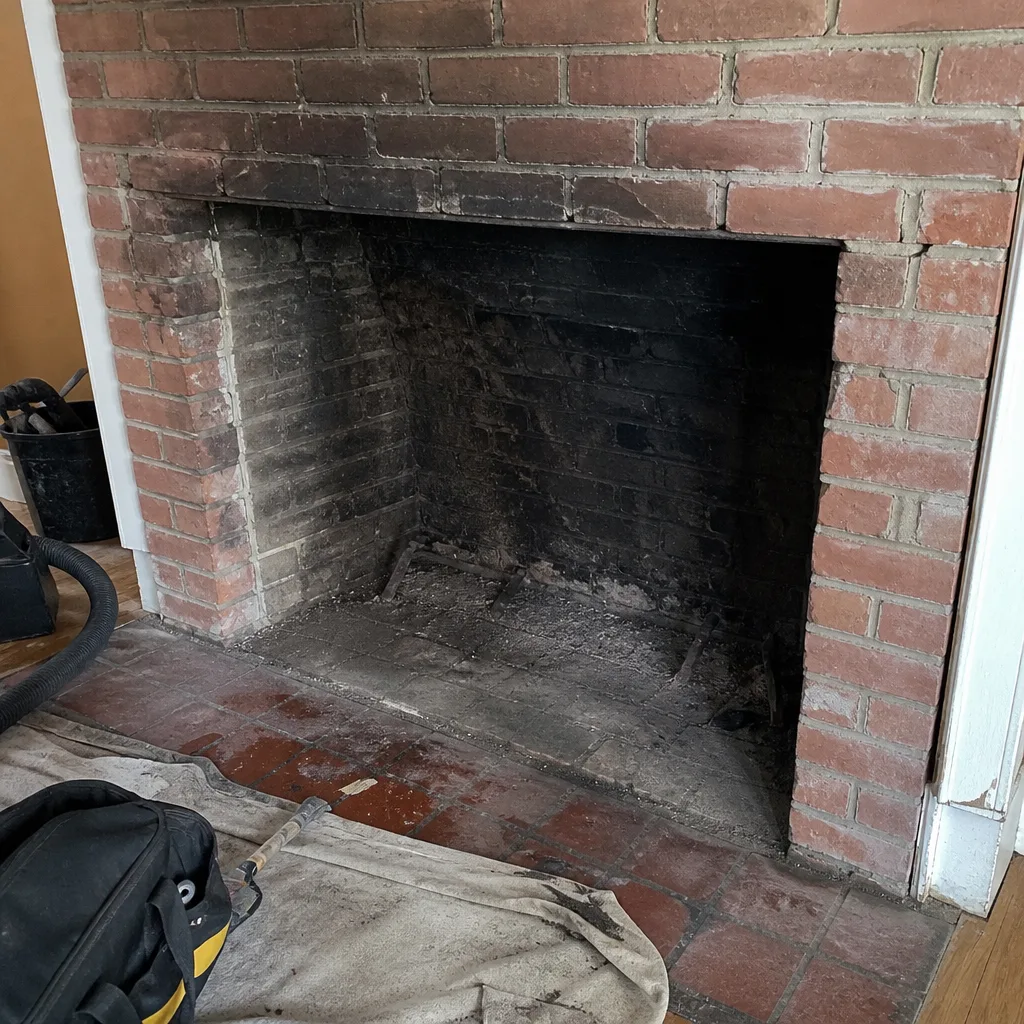 Before
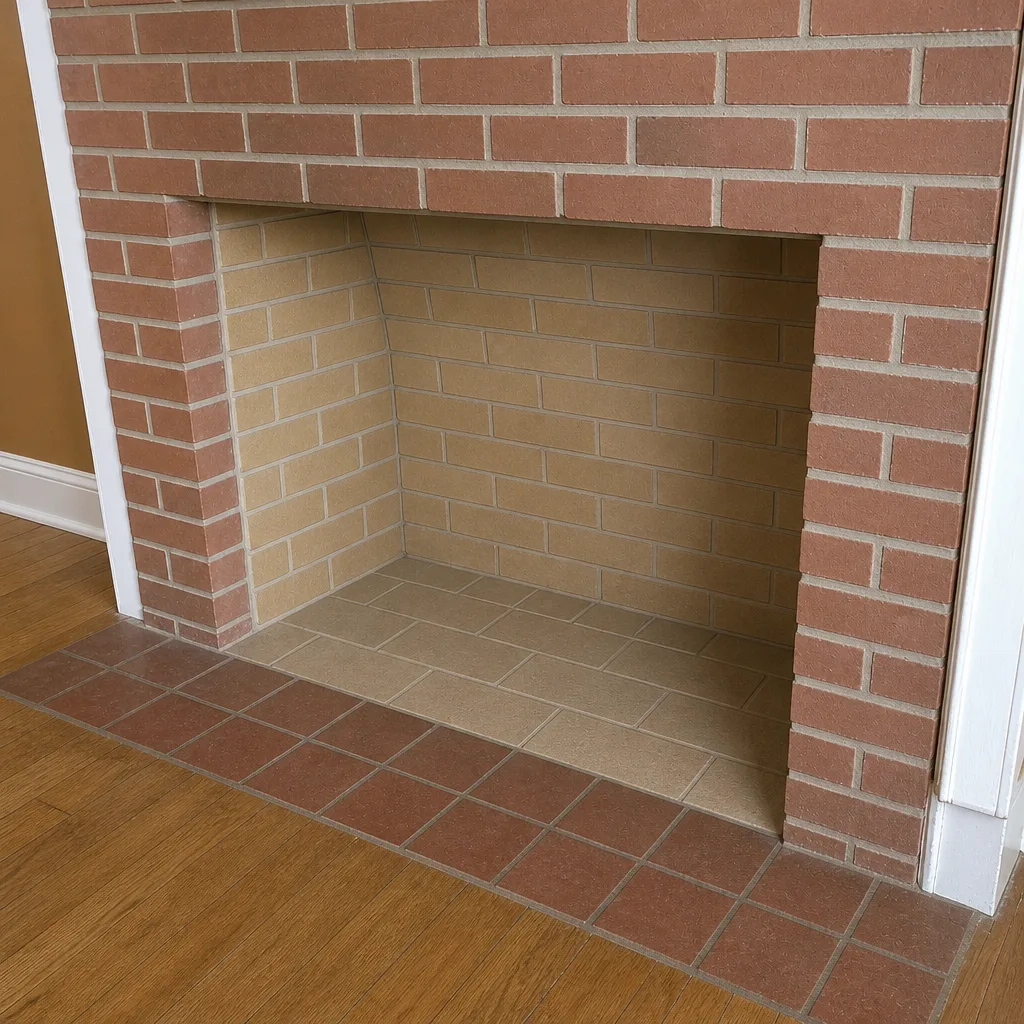 After
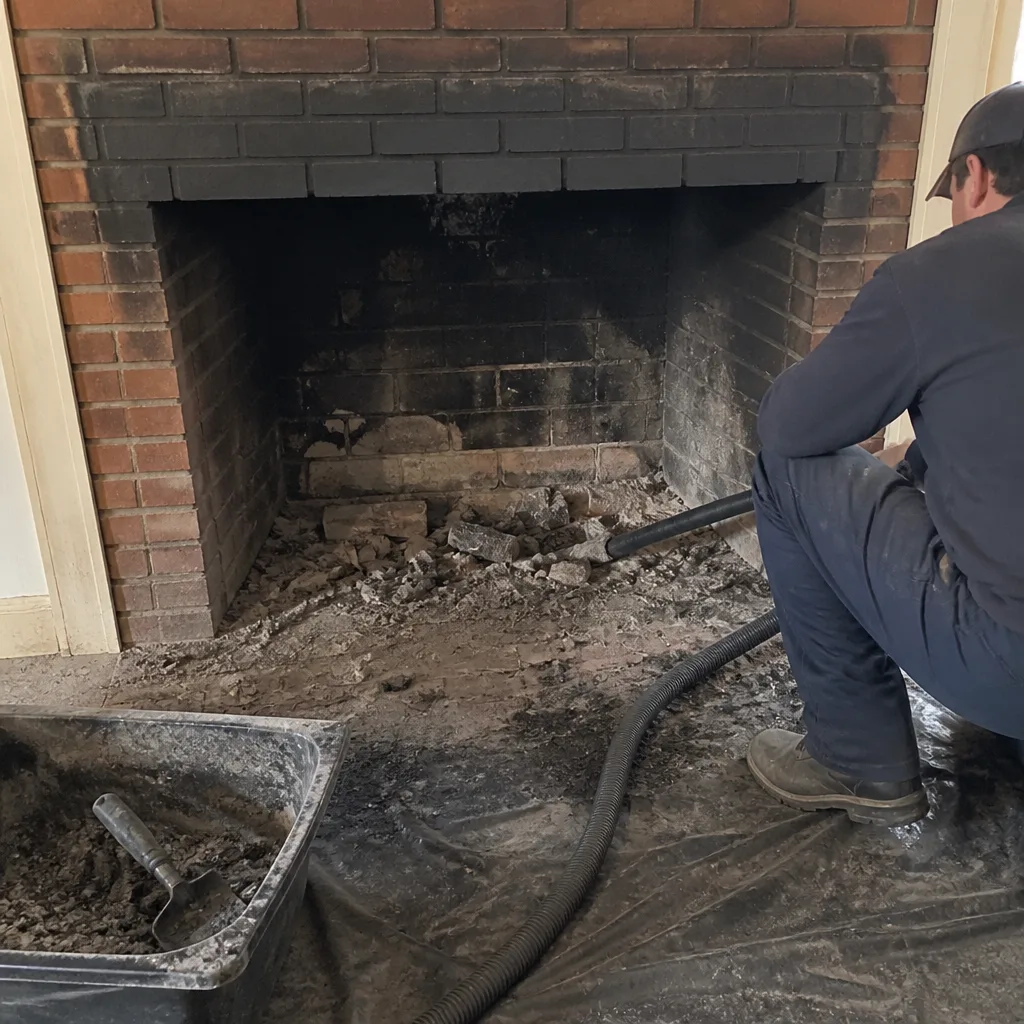 Before
 After
 Before
 After
Frequently Asked Questions
Once a year is the standard baseline for a wood-burning fireplace, and that cadence makes sense for most Woodside homes. If you’re burning a lot of fires during the colder months or using unseasoned wood, a seasonal sweep in early autumn catches creosote before it carbonizes. Gas fireplace owners can usually go longer between sweeps, but still need an annual visual inspection of the flue and cap. Call (855) 550-7639 for an inspection quote – estimates are free.
Not every chimney needs a new liner. Liner replacement is justified when the existing liner has visible gaps, cracks through the wall, or has lost structural integrity, and a camera inspection is what establishes that. Where the liner is intact but worn, HeatShield flue resurfacing can restore the interior without the cost of full replacement. We won’t recommend liner work without showing you the footage that supports it. Call (855) 550-7639 for an inspection.
A musty firebox smell is a moisture signal, not a creosote signal, and it typically traces to a crown crack, failed cap, or flashing leak. It should be looked at within the same week because trapped moisture degrades mortar and brick over time. The earlier the source is found, the cheaper the fix. Call (855) 550-7639 – estimates are free.
Yes. Chimney fires can burn quietly inside the flue with no visible flame from the firebox, sometimes showing only as a low roar, a crackling sound, or puffs of smoke from the top. That’s one reason we inspect the entire flue interior rather than just the firebox visually. Creosote is the fuel, and a camera view is what tells you how much of it is there. Call (855) 550-7639 for a sweep.
Sometimes, but the materials matter. Crown repair on a masonry chimney uses sealants and mortars designed to flex with the structure without cracking, and caps use specific trade-grade components for flue exposure. We source from Olympia Chimney, an industry trade distributor, and install Famco and Gelco ventilation products so the cap and crown work is done with the right components in one visit. Call (855) 550-7639 for a free estimate.
Nothing, in most cases – but when it’s not nothing, it’s the expensive version: a hairline crown crack that becomes spalled brick, or a small liner gap that turns into a full liner replacement. The safe call is to let a professional look at it so you know which category you’re in. Call (855) 550-7639 – estimates are free, and we’ll tell you honestly what can wait and what can’t.
The Bottom Line
Chimney warning signs are ambiguous by nature. A smell, a stain, or a strange draft pattern is rarely self-explanatory, and that’s why guessing gets homeowners in trouble. Use the triage framework in this guide: anything involving sulfurous smells, smoke rollback, visible liner gaps, or structural movement is a do-not-use situation. Musty smells, active efflorescence, crown cracking, and rusted caps are same-week. Light maintenance items – hairline crown cracks, grey creosote, minor rust – can ride on your normal cycle. Pair this guide with a photographic inspection once a season, and you’ll know exactly what state your Woodside chimney is in, in plain numbers and pictures, without guessing. Call (855) 550-7639 for a free estimate.
Written by the team at Chimney Sweep Woodside.